
An economist from Yekaterinburg proposed transforming small Sverdlovsk cities into eco-villages.
Saving small towns in the Sverdlovsk region from depopulation is possible by transforming them into eco-friendly settlements. This idea was proposed by the director of the School of Economics and Management at UrFU, project leader of "Creative Reindustrialization of 'Second Tier' Cities in the Context of Digital Transformation" Irina Turgel, as reported by the press service of the School of Economics and Management at UrFU.
The decline in population in small towns and the migration of youth to megacities is a problem faced by many developed and developing countries, which are addressing it, among other ways, by creating bio-ecovillages, notes Turgel. As examples, she cites the Italian village of Torri Superiore, eco-farms and villages in the suburbs of Bursa, Turkey, ecovillages in the USA, the Norwegian Hurdal, Findhorn in Scotland, and others.
"This is an innovative model of territorial development that combines comfortable living, high technology, and nature for autonomous life. At its core are ecological responsibility, social community, and economic independence. People living in such places choose harmonious forms of coexistence with nature.
In such settlements, self-sustaining ecosystems are created that provide energy, heat, and food, and assume a closed cycle of waste recycling. By developing, for example, tourism in such locations, authorities and businesses from different countries can curb the depopulation of rural regions and the outflow of population to large cities," says Irina Turgel.
In the Sverdlovsk region, such locations could be Sysert, Nevyansk, and other small towns located within 1.5-2 hours' drive from Yekaterinburg, as well as more remote places like Turinskaya Sloboda, Shalya, and Baikalovo, believes the economist.
The Global Ecovillage Network (GEN) currently registers over 1,200 locations in 135 countries. In Russia, 13 ecovillages have been included in the GEN map, which were predominantly created in the late 1990s and early 2000s, and today most of them are no longer functioning.
"Undoubtedly, cities and settlements located favorably—in picturesque natural landscapes, near megacities, and with developed transport infrastructure—are easier to develop. Such cities can become experimental in testing the principles of sustainable development and using eco-friendly approaches in everyday life (the use of solar panels, waste sorting, recycling), as well as inexpensive creative projects. For example, organizing glamping in such areas is relatively low-cost. The investment in the project will be about 100 million rubles, which can be recouped in 6-10 years through attracting grants, investors, and tourists," adds Irina Turgel.
At the state level, the concept of bio-ecovillages is also being discussed and developed, but primarily from the perspective of developing remote areas, for example, the Arctic zone. In particular, plans are being announced in Karelia to create bio-ecovillages based on waste from the forestry industry. Testing of advanced technologies is ready to begin this year in Petrozavodsk.
According to the expert, it is more logical to transform existing small towns into ecovillages and develop high-tech agricultural production, biotechnology (waste processing into biogas, closed resource cycles, etc.) there than to create settlements from scratch.
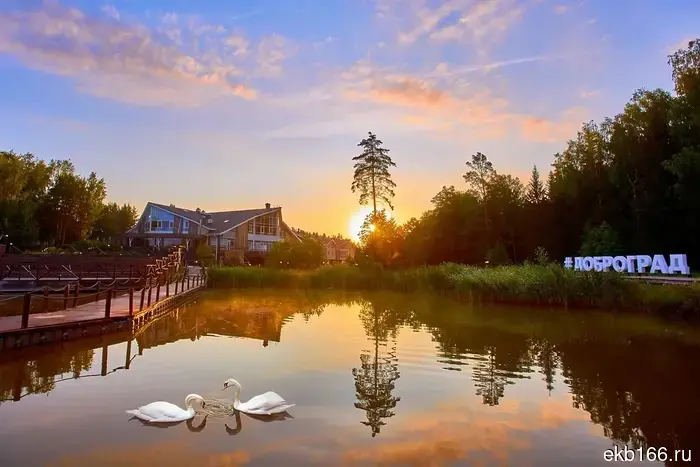
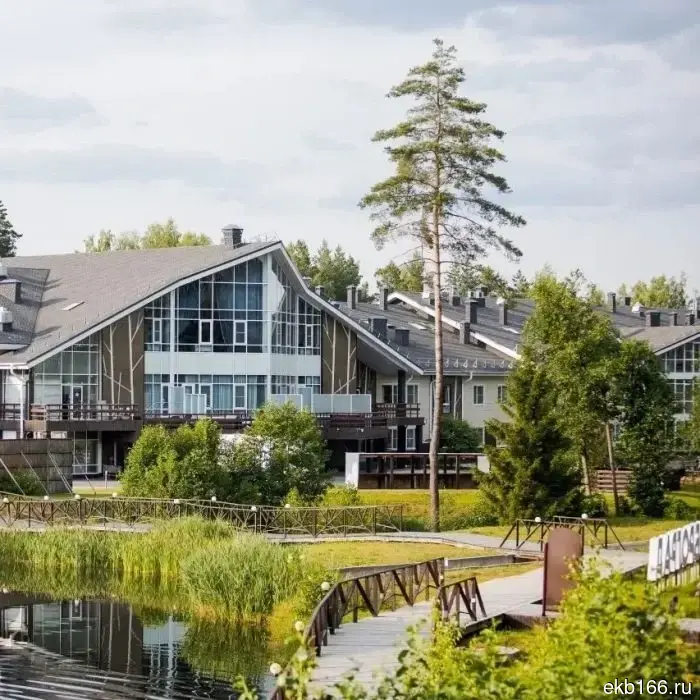
"For comparison, the construction of the Dobrograd settlement (a new city in the Vladimir region, the first in Russia being created with private investments with active state support—note from Uralweb.ru), which is not even an ecovillage in the classical sense, has already cost about 31 billion rubles, while the total amount of necessary investments is estimated at 73 billion. Creating a network of new functional small cities in Russia looks, to put it mildly, extremely optimistic also because, in addition to investments, it is necessary to attract residents to these territories who should be involved in the local economy, not just work remotely," concludes Irina Turgel.
Другие Новости Екатеринбурга (ЕКБ166)
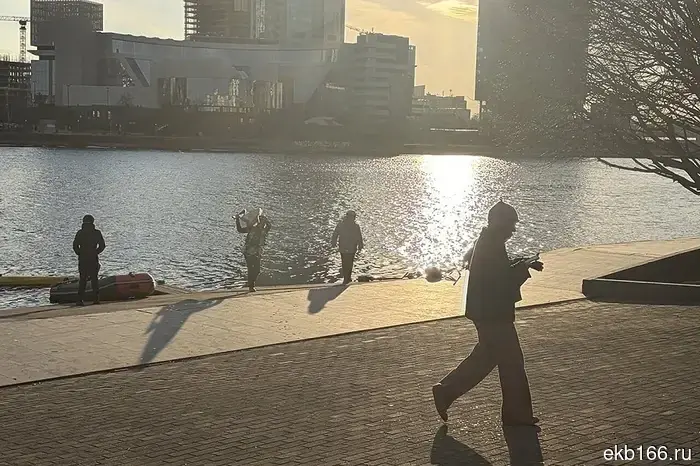 Passersby broke the fence on the river Olkhovka embankment, which is closed to passage.
Residents of Yekaterinburg knocked down the fence blocking the passage along the banks of the Olkhovka River, which was closed for repairs. This was reported by the portal 66.RU. The area along the Iset and Olkhovka rivers began to be improved on April 16, but by the evening, the first "defense" had fallen.
Passersby broke the fence on the river Olkhovka embankment, which is closed to passage.
Residents of Yekaterinburg knocked down the fence blocking the passage along the banks of the Olkhovka River, which was closed for repairs. This was reported by the portal 66.RU. The area along the Iset and Olkhovka rivers began to be improved on April 16, but by the evening, the first "defense" had fallen.
 The most expensive hockey player has left "Avtomobilist" in English.
The hockey club "Avtomobilist" terminated the contract with forward Reid Boucher at the initiative of the player. This was reported by the club's press service on Thursday, April 16.
The most expensive hockey player has left "Avtomobilist" in English.
The hockey club "Avtomobilist" terminated the contract with forward Reid Boucher at the initiative of the player. This was reported by the club's press service on Thursday, April 16.
 The most expensive hockey player has left "Avtomobilist" in English.
The hockey club "Avtomobilist" terminated the contract with forward Reid Boucher at the initiative of the player. This was announced by the club's press service on Thursday, April 16.
The most expensive hockey player has left "Avtomobilist" in English.
The hockey club "Avtomobilist" terminated the contract with forward Reid Boucher at the initiative of the player. This was announced by the club's press service on Thursday, April 16.
An economist from Yekaterinburg proposed transforming small Sverdlovsk cities into eco-villages.
It is possible to save small towns in the Sverdlovsk region from depopulation by transforming them into eco-friendly settlements. This idea was proposed by the director of the School of Economics and Management of the Ural Federal University, project leader of "Creative Reindustrialization of 'Second Tier' Cities in the Context of Digital Transformation" Irina Turgel, as reported by the press service of the School of Economics and Management of the Ural Federal University.