

Sverdlovsk schoolchildren created "ogurtyk" and "tomatofel."
Students of school No. 137 in the village of Shabrovsky in Yekaterinburg have grown unusual plants - "ogurtyk" and "tomatofel" - as part of an agronomic experiment on grafting vegetable crops. This was reported by Svetlana Bashkirtseva, a biology and chemistry teacher and head of the "Growth Point" center, to RIA Novosti.
The first experiment involved grafting a cucumber onto the root system of a pumpkin. The students grew seedlings in advance, and after the third leaf appeared, they performed the grafting. As a result, they managed to obtain six viable plants, which were planted in a greenhouse. The "ogurtyks" grew faster than regular cucumbers and appeared sturdier due to the strong roots of the pumpkin. The harvest turned out to be good, but the taste of the fruits was less intense, which the participants of the experiment noted as a drawback.
Later, the students conducted a new experiment - grafting a tomato onto a potato, resulting in "tomatofel." This experiment was less successful: only one plant survived, yielding a small harvest - tiny tomatoes grew above ground, while small tubers formed underground.
According to Bashkirtseva, such plants cannot be considered hybrids, as they are not obtained through crossbreeding but through grafting. The seeds of "ogurtyk," for example, will produce regular cucumbers. Despite the fact that the participants of the experiments have already graduated from school, their work remains an exemplary example of an enthusiastic scientific approach.
Другие Новости Екатеринбурга (ЕКБ166)
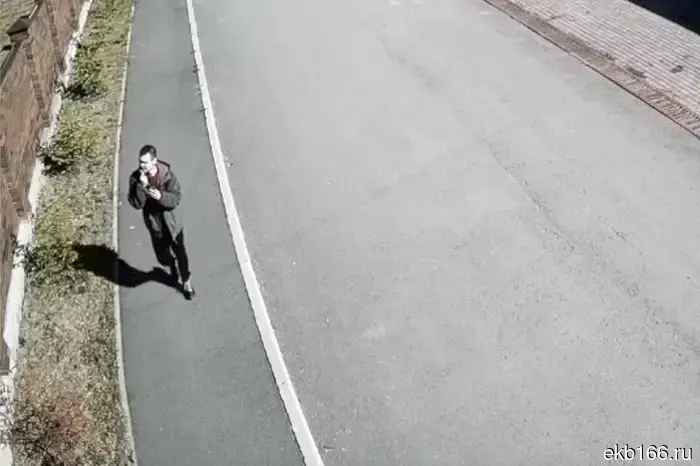 In Yekaterinburg, a 13-year-old schoolboy helped fraudsters rob his own house.
A schoolboy from Yekaterinburg left his keys to scammers for them to conduct a "search" in his own house. This was reported by the press group of the Ministry of Internal Affairs of Yekaterinburg.
In Yekaterinburg, a 13-year-old schoolboy helped fraudsters rob his own house.
A schoolboy from Yekaterinburg left his keys to scammers for them to conduct a "search" in his own house. This was reported by the press group of the Ministry of Internal Affairs of Yekaterinburg.
 The cinema has reopened at "Park House".
A month later, a cinema opened in the "Park House" shopping and entertainment center, where violations were identified. This was reported by the press service of the "Premier Hall" network.
The cinema has reopened at "Park House".
A month later, a cinema opened in the "Park House" shopping and entertainment center, where violations were identified. This was reported by the press service of the "Premier Hall" network.
 Sverdlovsk schoolchildren created "ogurtyk" and "tomatofel."
Students of school No. 137 in the Shabrovsky settlement of Yekaterinburg have grown unusual plants - "ogurtyk" and "tomatofel" - as part of an agronomic experiment on grafting vegetable crops.
Sverdlovsk schoolchildren created "ogurtyk" and "tomatofel."
Students of school No. 137 in the Shabrovsky settlement of Yekaterinburg have grown unusual plants - "ogurtyk" and "tomatofel" - as part of an agronomic experiment on grafting vegetable crops.
 The cinema has reopened in "Park House".
A month later, a cinema opened in the "Park House" shopping and entertainment center, where violations were identified. This was reported by the press service of the "Premier Hall" network.
The cinema has reopened in "Park House".
A month later, a cinema opened in the "Park House" shopping and entertainment center, where violations were identified. This was reported by the press service of the "Premier Hall" network.
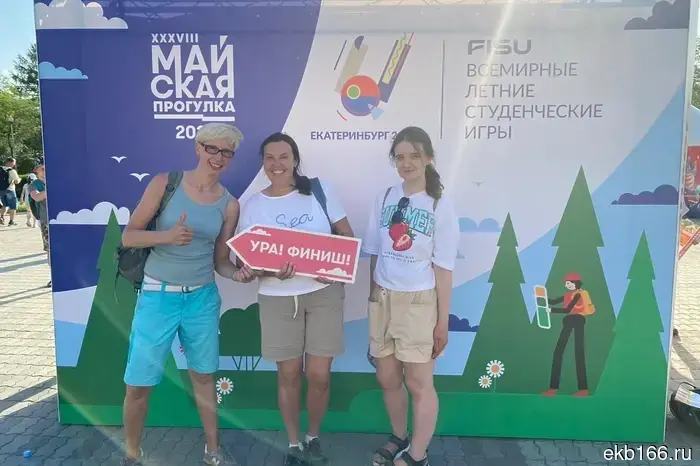 The routes of the "May Walk" have been announced.
Let us remind you that on May 17, 2026, the "May Walk" will take place for the 43rd time in Yekaterinburg. This year, participants can choose one of four routes: the shortest option is an urban route of 15 km.
The routes of the "May Walk" have been announced.
Let us remind you that on May 17, 2026, the "May Walk" will take place for the 43rd time in Yekaterinburg. This year, participants can choose one of four routes: the shortest option is an urban route of 15 km.
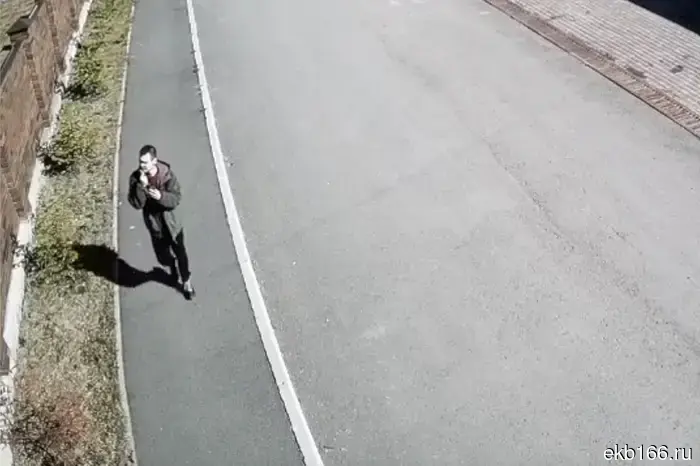 In Yekaterinburg, a 13-year-old schoolboy helped fraudsters rob his own home.
A Yekaterinburg schoolboy left his keys to scammers for them to conduct a "search" in his own home. This was reported by the press group of the Yekaterinburg Ministry of Internal Affairs.
In Yekaterinburg, a 13-year-old schoolboy helped fraudsters rob his own home.
A Yekaterinburg schoolboy left his keys to scammers for them to conduct a "search" in his own home. This was reported by the press group of the Yekaterinburg Ministry of Internal Affairs.
Sverdlovsk schoolchildren created "ogurtyk" and "tomatofel."
Students of school No. 137 in the Shabrovsky settlement of Yekaterinburg have grown unusual plants - "ogurtyk" and "tomatofel" - as part of an agronomic experiment on grafting vegetable crops.