

"Orthostatic hypotension." The doctor named the cause of dangerous falls in old age.
One of the main dangers in treating hypertension in older patients is a sharp drop in blood pressure when transitioning from a horizontal to a vertical position, known as orthostatic hypotension. This was explained to the Uralweb.ru portal by the head of the geriatric department of the Russian Gerontological Scientific Clinical Center of the Pirogov University of the Ministry of Health of Russia, geriatrician, and candidate of medical sciences Valentina Ostapenko.
“Orthostatic reactions increase with age. This is related to the aging process itself, the formation of vascular stiffness, and chronic diseases. Dehydration and a number of medications can exacerbate orthostatic reactions,” explains Valentina Sergeevna.
Orthostatic hypotension increases the risk of falls, fractures, including hip fractures. It is also associated with a decline in cognitive functions.
The doctor recommends:
1. Always conduct an orthostatic test - an accessible and simple research method.
To do this, blood pressure should be measured while lying down after 7 minutes of rest, then in a standing position at the 1st and 3rd minute. If the systolic ("upper") pressure drops by 20 mm Hg or more, and the diastolic ("lower") pressure drops by 10 mm Hg or more, this indicates the presence of orthostatic hypotension.
2. Avoid sudden rises from bed: sit for about a minute first, then stand up.
3. Monitor adequate fluid intake - an average of 30 ml per kilogram of body weight (about 1.6 liters for women and 2 liters for men), unless the doctor has restricted fluid intake.
Earlier, Valentina Ostapenko urged that when treating arterial hypertension in older age, one should consider the geriatric status of the person, rather than striving for a general norm.
Другие Новости Екатеринбурга (ЕКБ166)
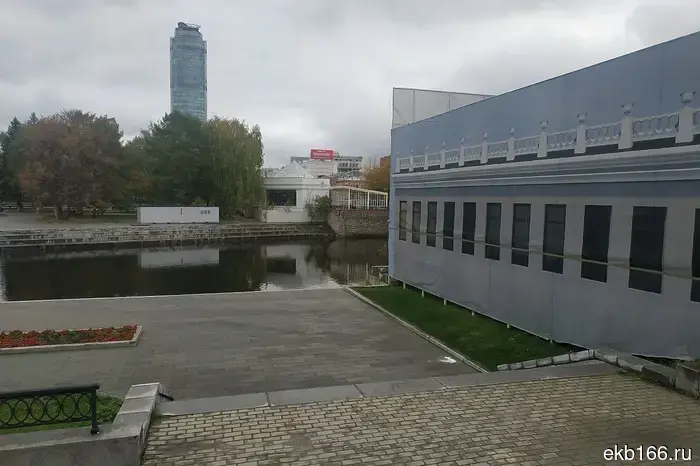 The opening of the restaurant on Plotinka underwent another examination in Yekaterinburg.
The historical and cultural expertise has approved the next stage of work on creating a restaurant in Yekaterinburg in the abandoned "Flowers" pavilion next to the Museum of Fine Arts, reports "URA.RU".
The opening of the restaurant on Plotinka underwent another examination in Yekaterinburg.
The historical and cultural expertise has approved the next stage of work on creating a restaurant in Yekaterinburg in the abandoned "Flowers" pavilion next to the Museum of Fine Arts, reports "URA.RU".
 A drone danger regime has been declared in the Sverdlovsk region.
"Attention! A drone danger regime has been declared in the region!" says the channel of the governor of the Sverdlovsk region, Denis Pasler, in MAX. Responsible services and agencies are taking all necessary measures.
A drone danger regime has been declared in the Sverdlovsk region.
"Attention! A drone danger regime has been declared in the region!" says the channel of the governor of the Sverdlovsk region, Denis Pasler, in MAX. Responsible services and agencies are taking all necessary measures.
 A drone danger regime has been declared in the Sverdlovsk region.
"Attention! A drone danger regime has been declared in the region!" says the channel of the governor of the Sverdlovsk region, Denis Pasler, in MAX. Responsible services and agencies are taking all necessary measures.
A drone danger regime has been declared in the Sverdlovsk region.
"Attention! A drone danger regime has been declared in the region!" says the channel of the governor of the Sverdlovsk region, Denis Pasler, in MAX. Responsible services and agencies are taking all necessary measures.
.webp) A 4-year-old boy has gone missing in Nevyansk (PHOTO)
A 4-year-old boy has gone missing in the Nizhny Tagil district, reports the channel "Evil Yekaterinburg" on MAX. Four-year-old Kirill Savinkov disappeared on Sunday, May 17, near the Tavatuy station.
A 4-year-old boy has gone missing in Nevyansk (PHOTO)
A 4-year-old boy has gone missing in the Nizhny Tagil district, reports the channel "Evil Yekaterinburg" on MAX. Four-year-old Kirill Savinkov disappeared on Sunday, May 17, near the Tavatuy station.
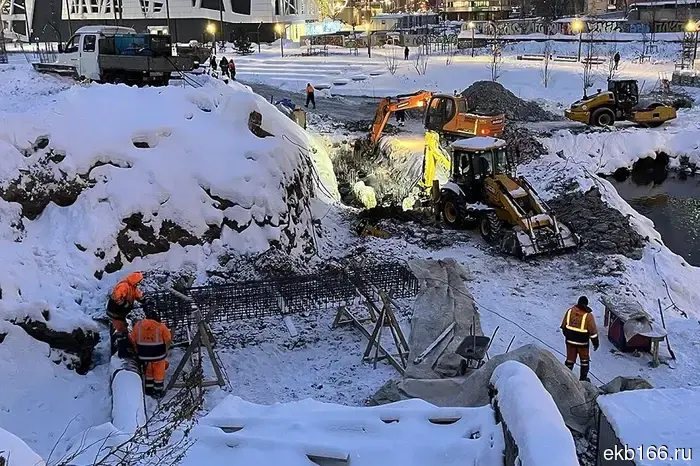 A version has emerged as to why there is only one metro line in Yekaterinburg.
Yekaterinburg is known as a city where, for decades, they have been building and still have not completed the second line of the metro. Why this is happening is suggested in a large article dedicated to the history of the Yekaterinburg subway by "Kommersant-Ural."
A version has emerged as to why there is only one metro line in Yekaterinburg.
Yekaterinburg is known as a city where, for decades, they have been building and still have not completed the second line of the metro. Why this is happening is suggested in a large article dedicated to the history of the Yekaterinburg subway by "Kommersant-Ural."
 The lost child in Nevyansk was found in a sofa.
Four-year-old Kirill, whose search was announced today by Sverdlovsk media, was found in a sofa. Sleeping. "He woke all the adults up, but decided to hide in the sofa and fell asleep there," writes the channel "Evil Yekaterinburg" in MAX, citing E1.RU.
The lost child in Nevyansk was found in a sofa.
Four-year-old Kirill, whose search was announced today by Sverdlovsk media, was found in a sofa. Sleeping. "He woke all the adults up, but decided to hide in the sofa and fell asleep there," writes the channel "Evil Yekaterinburg" in MAX, citing E1.RU.
"Orthostatic hypotension." The doctor named the cause of dangerous falls in old age.
One of the main dangers in treating hypertension in older patients is a sharp drop in blood pressure when transitioning from a horizontal position to a vertical one, known as orthostatic hypotension.