

The State Traffic Inspectorate explained what each of the three types of violation detection complexes is aimed at.
In the Sverdlovsk region, there are currently more than 400 stationary, over 60 mobile, and 29 mobile complexes for photo and video recording of traffic violations. The differences in their tasks were explained at a press conference at the TASS-Ural press center on Tuesday by the acting deputy head of the Automated Photo and Video Recording Center (CAFP) of the State Traffic Inspectorate of the Ministry of Internal Affairs of Russia for the Sverdlovsk region, Sergey Kobyakov.
The stationary photo and video recording complexes are installed at more than 400 locations in the Sverdlovsk region (traffic light objects, poles). The complexes are equipped with 1,800 cameras. "If it's an intersection, there are at least 4-6 cameras," explains Sergey Kobyakov.
They record a wide range of violations. First of all, this includes the entire spectrum of violations related to passing through intersections (running a red light, crossing the stop line, violating lane requirements, entering the oncoming traffic lane).
In addition to stationary complexes, mobile ones are also used in the region, with more than 60 in operation.
"We deploy them in accident-prone areas where we cannot install a stationary complex. For example, if there is no necessary infrastructure, but the location requires our attention," explained a representative of the Automated Administrative Offenses Recording Center (CAFP).
Additionally, there are 29 mobile complexes used in the Sverdlovsk region. They are installed on vehicles and record violations while they are in motion.
Mobile violation recording complexes identify administrative violations related to stopping/parking vehicles on the roadway in violation of road signs 3.27 "No Stopping," as well as on sidewalks. Mobile complexes also move along regional and federal roads, recording speed limit violations and entries into oncoming traffic lanes.
This year, the use of mobile complexes has been expanded—they now record violations not only in Yekaterinburg but also in Verkhnyaya Pyshma, Berezovsky, Kamensk-Uralsky, and Nizhny Tagil. Starting this year, all complexes—stationary, mobile, and mobile—record violations related to the non-use of seat belts. This also applies to the use of mobile phones by drivers while driving.
The effectiveness of the use of violation recording complexes is measured by one indicator—reduction in accidents. According to Sergey Kobyakov, this year the Sverdlovsk region has achieved an overall reduction in traffic accidents with fatalities and injuries (-10%), a decrease in the total number of fatalities in traffic accidents (-16%), and injuries (-8%).
Moreover, in 70% of the locations where stationary complexes are installed, this year it has been possible to achieve a reduction and even a complete absence of traffic accidents with injuries, noted a representative of the State Traffic Inspectorate. In 95% of the locations where mobile complexes are present this year, either no traffic accidents occurred, or their number decreased compared to last year.
Другие Новости Екатеринбурга (ЕКБ166)
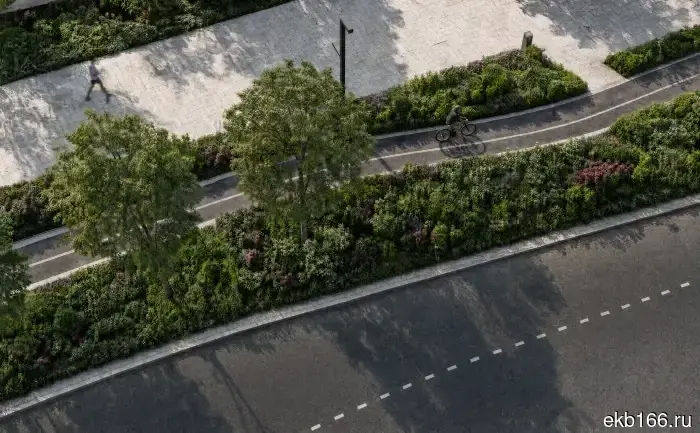 The new gymnasium building from "Forum" will be built in Yekaterinburg on a new street.
The new building of Gymnasium No. 116 in the "Forum Park" quarter will be located on a new section of Ukhtomskaya Street, designed by the developer. The project documentation for the new transport artery has been approved by the State Expert Review.
The new gymnasium building from "Forum" will be built in Yekaterinburg on a new street.
The new building of Gymnasium No. 116 in the "Forum Park" quarter will be located on a new section of Ukhtomskaya Street, designed by the developer. The project documentation for the new transport artery has been approved by the State Expert Review.
 A preserved recreation base is being sold in the Sverdlovsk region for the price of an apartment.
The recreation center "Metallurg," owned by JSC "NPK Uralvagonzavod," has been put up for sale again, reports the portal v-tagile.ru.
A preserved recreation base is being sold in the Sverdlovsk region for the price of an apartment.
The recreation center "Metallurg," owned by JSC "NPK Uralvagonzavod," has been put up for sale again, reports the portal v-tagile.ru.
 The State Traffic Inspectorate explained what each of the three types of violation detection complexes is aimed at.
In the Sverdlovsk region, there are currently more than 400 stationary, over 60 mobile, and 29 mobile complexes for photo and video recording of traffic rule violations.
The State Traffic Inspectorate explained what each of the three types of violation detection complexes is aimed at.
In the Sverdlovsk region, there are currently more than 400 stationary, over 60 mobile, and 29 mobile complexes for photo and video recording of traffic rule violations.
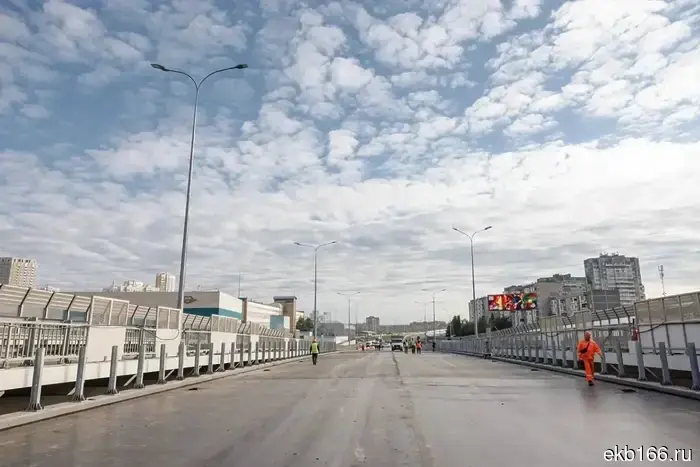 The traffic on the interchange at "Kalina" will be fully opened in September.
The construction of the interchange at the Kalina concern is expected to be completed by September, with the landscaping of the area to be finished by November. Currently, the readiness of the facility is 90%.
The traffic on the interchange at "Kalina" will be fully opened in September.
The construction of the interchange at the Kalina concern is expected to be completed by September, with the landscaping of the area to be finished by November. Currently, the readiness of the facility is 90%.
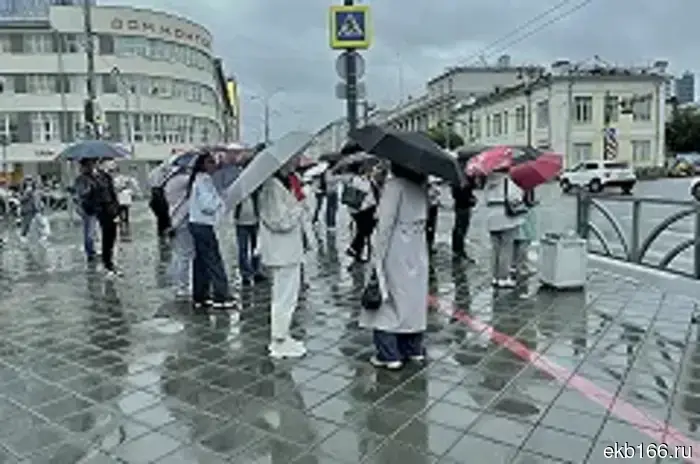 In Yekaterinburg, it will warm up to +25 °C due to a cyclone.
Cyclone "Margarete" will bring the long-awaited warming to the Middle Urals. This is indicated by the forecast of meteorologist Alexey Pulina. The air mass over the region is gradually warming up, still remaining moderately cold on Tuesday.
In Yekaterinburg, it will warm up to +25 °C due to a cyclone.
Cyclone "Margarete" will bring the long-awaited warming to the Middle Urals. This is indicated by the forecast of meteorologist Alexey Pulina. The air mass over the region is gradually warming up, still remaining moderately cold on Tuesday.
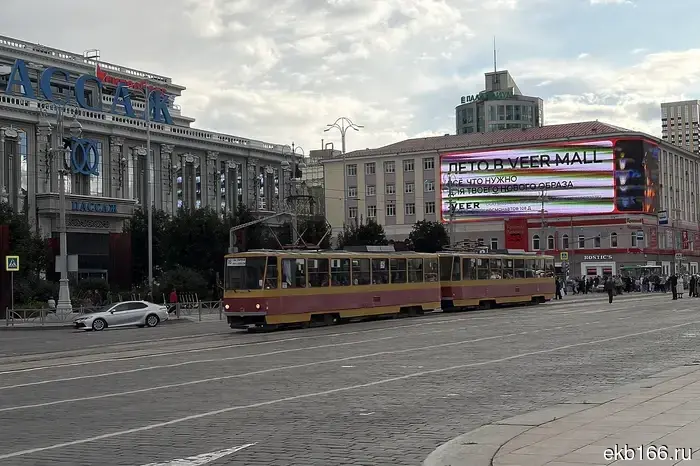 In Yekaterinburg, tram traffic is changing.
In Yekaterinburg, from August 20 to 30, traffic will be restricted on Tram Lane near house No. 4. Due to the work, the tram routes No. 2, 5, 7, 8, and 14 will be temporarily changed.
In Yekaterinburg, tram traffic is changing.
In Yekaterinburg, from August 20 to 30, traffic will be restricted on Tram Lane near house No. 4. Due to the work, the tram routes No. 2, 5, 7, 8, and 14 will be temporarily changed.
The State Traffic Inspectorate explained what each of the three types of violation detection complexes is aimed at.
In the Sverdlovsk region, there are currently more than 400 stationary, over 60 mobile, and 29 mobile complexes for photo and video recording of traffic rule violations.